
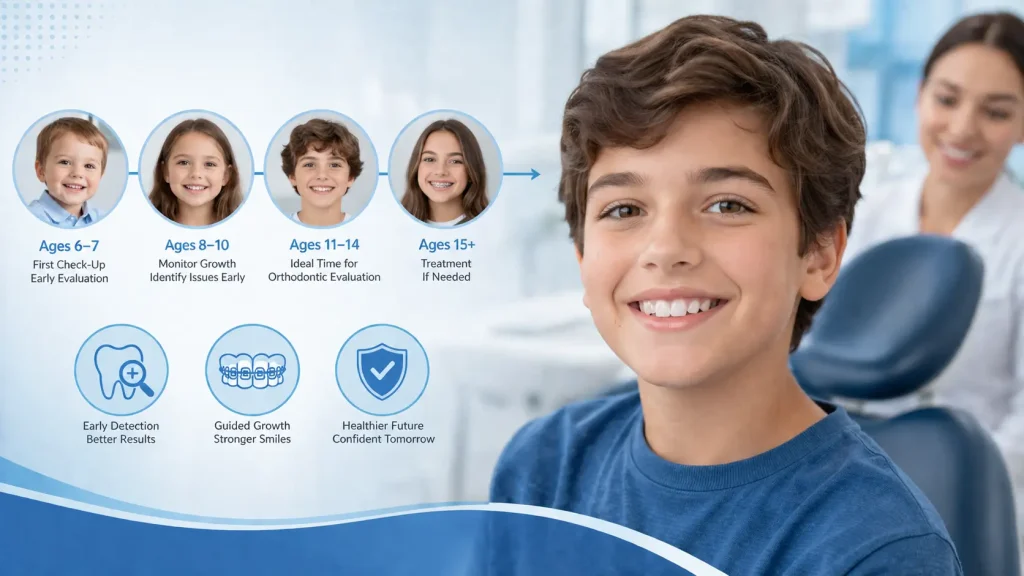
The American Association of Orthodontists recommends a first screening by age 7 — here is why timing matters.
By age 7, most children have a mix of baby teeth and permanent teeth that gives an orthodontist valuable information about how the jaw is developing and whether early intervention will be beneficial. Early evaluation — called Phase I treatment — does not mean every child will need braces right away. In fact, many children are simply monitored until their permanent teeth have fully come in. But for children with specific issues — like a narrow palate, a significant crossbite, or severe crowding — early treatment can reduce the complexity and duration of treatment later. Phase I interventions often involve palate expanders or partial braces to guide jaw growth during the window when the bones are still malleable. Waiting too long can mean more complex, expensive treatment down the road. A screening at age 7 costs nothing and takes 15 minutes. The insight it provides can be invaluable.